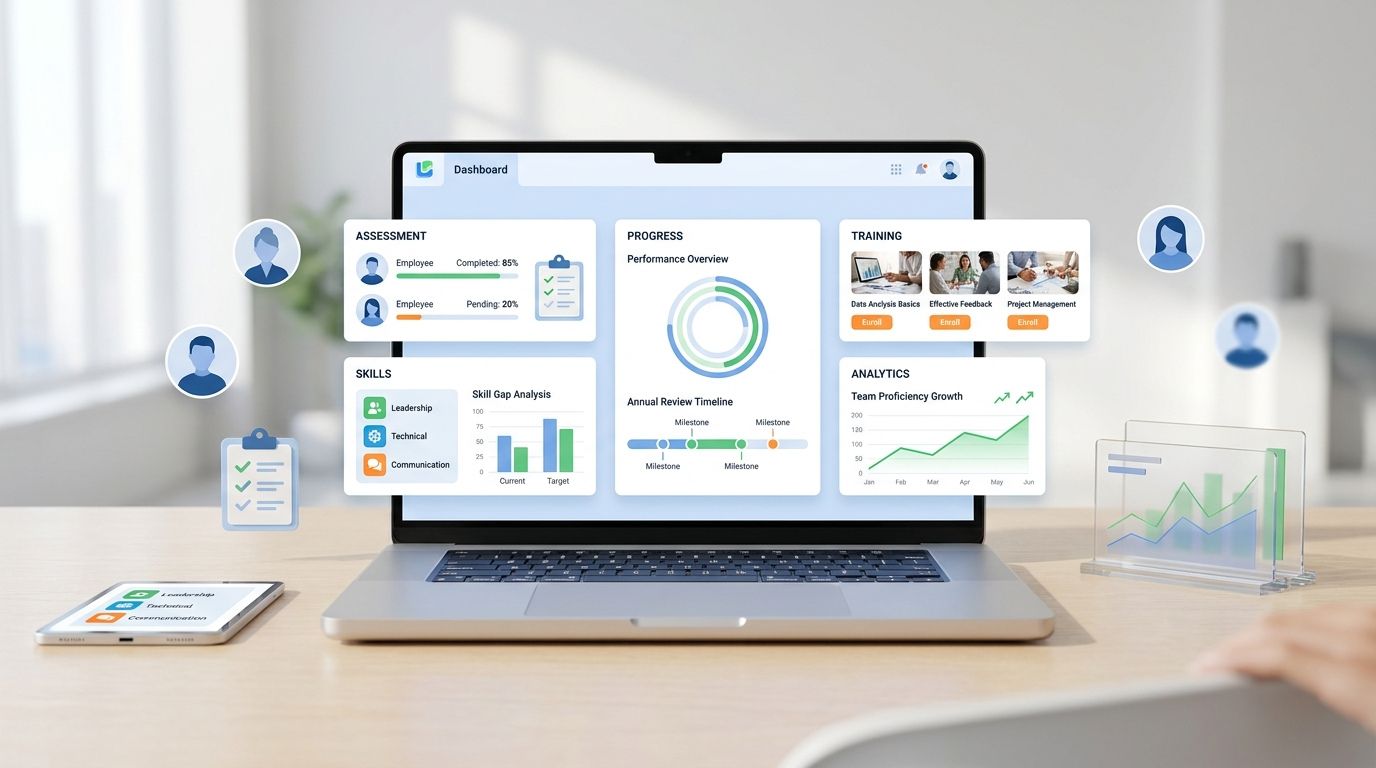



How an LMS Helps Companies Onboard New Employees Faster and More Consistently
The main goal of onboarding new employees is to help them learn about the company, the job, and how to do it well. But a lot of companies still use email threads, spreadsheets, shared folders, and verbal instructions to onboard new employees. That makes things move slowly and unevenly. One new employee gets all the training they need. Another person only gets part of it. A third person asks where the documents are and what to do next for the first week.
This is when an LMS for onboarding new employees comes in handy. Companies can use a learning management system (LMS) to give new employees training, keep track of their progress, assign role-based learning, and store important documents like policies, SOPs, and process guides. Companies can make one clear path for onboarding new hires and make it better over time instead of starting from scratch every time.
This article will show you how an LMS can help businesses onboard new employees faster and more consistently, what features are most important, and how to create a useful onboarding flow that works for both in-person and remote teams.
What is an LMS for onboarding new employees?
An LMS for employee onboarding is a program that helps a business train and guide new employees during their first few days, weeks, or months on the job. It can have things like welcome messages, company rules, introductions to the team, job-specific training, short tests, and tracking of progress.
Think of it as a central system for onboarding. HR and managers can set up one structured onboarding journey instead of sending ten separate emails and hoping nothing gets missed. The new employee logs in, sees what needs to be done, and then goes through each step.
- Training on the company's culture and how it works
- Rules and policies for HR
- Basics of security, privacy, and compliance
- Training for sales, HR, operations, tech, or support teams based on their roles
- Training on SOPs and processes
- Quizzes, thank-you notes, and reports of completion
Why manual onboarding doesn't work as well as it used to as companies grow
When a company is very small, manual onboarding can work. Problems start to show up when hiring picks up. Different managers talk about the same process in different ways. There are different folders for files. People forget important steps. Instead of making things better, HR teams spend time chasing updates.
The biggest problem is that things aren’t always the same. New hires shouldn’t have to rely on luck to get off to a good start. Companies often see slower ramp-up, repeated questions, process mistakes, and low confidence in the first month when onboarding is different from team to team.
- No one place to get training and documents
- Too many emails and reminders after the fact
- Not much information about what has been done
- There is no clear proof that policies or required training were looked over
- More difficult to onboard teams that work from home or in multiple locations
How an LMS speeds up the process of bringing on new employees
1. It gives each new employee a clear place to start
A new employee shouldn’t have to spend the first few days looking for training materials. An LMS already sets the path. When the person logs in, they can see the first tasks, the next tasks, and what is due later. That makes things less confusing and saves both the employee and the manager time.
2. It cuts down on HR's need to do the same work over and over again.
Without an LMS, HR teams have to do the same things over and over again for each new hire: send out documents, explain the basics, remind people to finish training, and get them to sign off. A lot of that can be done automatically by an LMS. You can give the same onboarding flow to different departments or roles over and over, with small changes each time.
3. It puts training, documents, and checks all in one place.
Reading a welcome note is not enough for good onboarding. A new employee might need to go over the rules, learn how to use the tools, understand how work gets done at the company, and make sure they know the basics. An LMS keeps these things in one place. That means you won’t have to look as much and won’t miss as many steps.
4. It helps managers find delays early on.
It’s hard to keep track of what’s still pending when onboarding happens over email and chat. Most of the time, managers and HR teams can see how far along employees are in an LMS, which modules are overdue, and how well they did on assessments. That makes it easier to follow up. If someone is stuck, they can get help sooner rather than later.
5. It helps people get ready for their roles faster.
It’s important to be quick, but not if training becomes shallow. A good LMS helps businesses get things done faster without missing the basics. For instance, a new sales hire can first go through the company’s standard onboarding process, and then they can learn about the products, how to make a pitch, how to use the CRM, and how to get approvals. A support hire can learn how to handle tickets, set response standards, and follow escalation steps. The path is still important to the job.
How an LMS makes onboarding more consistent
One of the main reasons businesses buy onboarding software is to make sure things stay the same. Onboarding faster is helpful, but onboarding consistently has an even bigger effect over time. It means that all employees get the same information about the company’s rules, standards, and how they should do their jobs.
The same basic training for all new hires
An LMS makes it easier to train all of your employees in the same way. This could include things like the company’s values, HR rules, basic security information, rules for following the law, and how to act at work. That makes the whole business start from a more stable place.
Learning paths based on roles
Not all employees need the same kind of job training. The common part of onboarding should stay the same, but there can be modules for each role below it. This helps businesses keep things organized while also making sure that people don’t get too much information that they don’t need.
Version control for documents and procedures
When onboarding uses old files in shared folders, workers might read information that is no longer correct. Companies can update modules and keep one approved version in use with an LMS. This is very useful for SOPs, compliance issues, and changes to processes.
Clear records of when and how things were finished and acknowledged
Some onboarding tasks need more than just a message that says “please read this.” An LMS can help keep track of whether a policy was read, a short test was passed, or an acknowledgment was sent. That makes it easier for HR teams to keep track of things and hold people accountable.
Manual onboarding vs LMS onboarding
| Area | Manual onboarding | LMS onboarding |
|---|---|---|
| Training delivery | Shared through email, folders, calls, or verbal instructions | Assigned in one structured path |
| Tracking | Usually manual and hard to update | Visible through reports and dashboards |
| Consistency | Depends on manager or team | Same core journey for every new hire |
| Role-based learning | Often added later or missed | Easy to assign by department or role |
| Remote onboarding | Can feel scattered | Central and easier to manage |
| Proof of completion | May rely on spreadsheets or email replies | Stored in one system |
What companies should include in onboarding LMS training
A good onboarding program isn’t just a list of files. It should help the new employee answer some simple questions:
What type of business is this?
What are the rules?
How do we get things done?
What does my job entail?
Who should I ask for help?
- A message of welcome and a look at the company
- How the team is set up and who reports to whom
- Rules for taking time off, HR policies, and behavior at work
- Basic rules for safety, privacy, and following the law
- Access to tools and system walkthroughs
- Job training that is specific to the role
- SOPs, process guides, and standards that are expected
- Quick tests or quizzes on important topics
- Managers check in with employees during the first month
Advantages of using an LMS to train new employees
- New employees can get up to speed faster
- HR and managers have to do less work by hand
- Training that is more consistent across teams and locations
- Better training for employees who work from home or in a hybrid setting
- Clear proof that required topics were covered
- Updates are easier when processes or policies change
- More visibility into how onboarding is going
Things you should not do
- Putting up too much content at once and calling it onboarding
- Not changing the training path for each role
- Not checking in with the manager because the LMS is in place
- Only keeping track of completion, not understanding
- Not removing old policies or SOPs from the system after updates
A learning management system (LMS) is a great tool, but it doesn’t make good onboarding habits unnecessary. Most of the time, the best results come from a mix of structured self-paced learning, help from a manager, and timely follow-up.
Is an LMS useful for remote onboarding?
Yes. In fact, one of the best examples of how to use an LMS is for remote onboarding. It is even harder to onboard someone when they are not in the same office. A learning management system (LMS) gives remote workers a place to start, a path to follow, and a record of what they have done.
It also helps managers make sure that onboarding for remote workers is more consistent. The company doesn’t have to rely on live calls for everything; it can use a mix of self-paced modules, check-ins, and role training. This is usually easier to scale than a process that is done by hand.
Frequently Asked Questions
Final Thought
A good onboarding process helps new employees get used to the company, learn faster, and avoid making common mistakes. A bad onboarding experience does the opposite. It wastes time, makes things unclear, and makes it hard for new employees to get started.
Companies can make the process of onboarding new employees more organised with an LMS. It makes it easier for HR and managers to see what’s going on, gives each new hire a clear path, and gives the business a more consistent way to train people that follows company standards. It’s a useful step forward for companies that want cleaner onboarding records, as well as for teams that are growing or working from home.
If your current onboarding still relies on scattered files and constant reminders, now might be the right time to switch to a structured LMS-based system.