


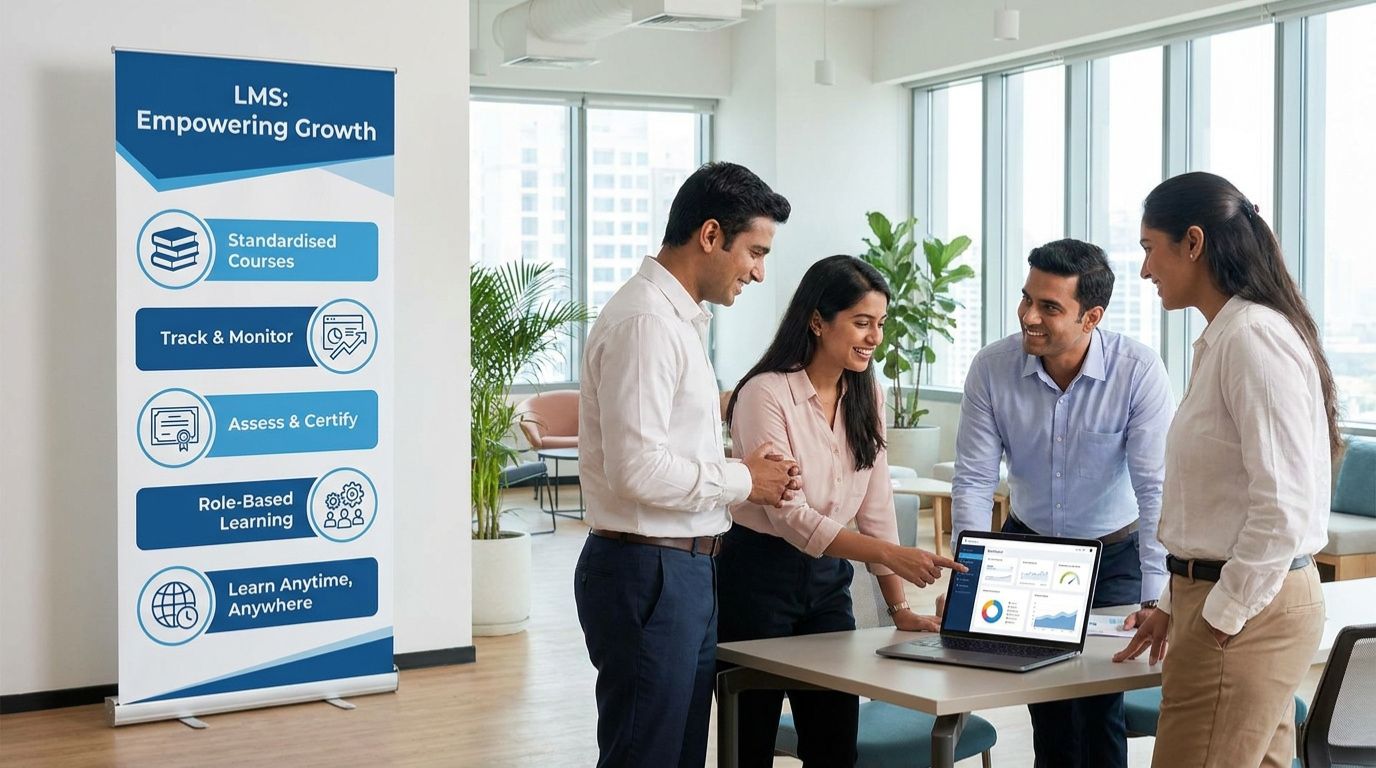
How to Build a Structured Employee Onboarding Program Using an LMS
Building a structured employee onboarding program is essential for setting up new hires for success. One of the best ways to do this is through a Learning Management System (LMS). An employee onboarding program LMS not only simplifies the training process but also helps track progress, set clear expectations, and ensure consistency across the organisation. In this blog, we’ll cover how to build an effective onboarding program using an LMS, the benefits and tips for success.
Why should you use an LMS for employee onboarding?
Many organisations are turning to LMS platforms when it comes to the best way to onboard new employees. Here is why:
- Centralised Access to Learning Material: With an LMS, employees can access any training material at any time and from anywhere, be it in the office or working from home.
- Streamlined Process: LMS streamlines the onboarding process by automating administrative tasks like paperwork, course assignments, and progress monitoring.
- Consistency: An LMS ensures every recruit receives the same training, establishing consistency across departments and teams.
How to Build a Successful Employee Onboarding Program with an LMS
1. Define Your Goals
Before starting your onboarding program, it’s important to set clear learning objectives. Think about what you want new hires to learn from the onboarding process. This could mean understanding the company culture, gaining specific skills, or getting to know important company policies.
2. Pick the Right LMS
To be well-structured, it is important to choose the right LMS for your employee onboarding program. Choose a system that provides easy-to-use features, scalability, and integration options with other HR systems. Some LMS platforms offer customization so that you can adapt them to your company’s specific needs.
3. Develop Content That Matters
Now you’re ready to create content to meet your onboarding goals. This could be in the form of training videos, quizzes, reading materials, and evaluations. The content should be interesting and interactive so new employees can keep their motivation and remember the information.
4. Streamline Your Processes
One of the biggest benefits of using an LMS is the ability to automate many of the tasks in the onboarding process. For example, you can automatically assign courses, send reminder emails, and track progress. This reduces the amount of manual work that HR teams have to do, letting them focus on other areas.
5. Leverage Social Learning
An employee onboarding program LMS should be about social learning as much as individual learning. Think about adding discussion forums, chat groups, or group projects where new hires can work together with their peers. This encourages engagement and builds community from day one.
6. Track Progress and Give Feedback
Regularly track the progress of each new hire using your LMS’s tracking features. Give feedback and support as needed. Regular feedback ensures new employees know where they stand and what they need to improve.
Must-Have Features in an LMS for Onboarding
1. User-Friendly
Your staff should be able to use the LMS easily. Select a system that has an intuitive interface and is not overwhelming for new hires.
2. Mobile-friendly
Many modern LMS platforms are mobile-friendly, excellent for remote or on-the-go workers. This enables employees to complete training modules at their own convenience.
3. Customisation
A good LMS for onboarding should allow you to customize the content and layout to match your company's brand and training needs.
4. Analytics & Reporting
Make sure the LMS you choose has reporting tools that allow you to track completion rates, quiz results, and overall employee engagement.
Mistakes to Avoid While Using LMS for Onboarding
1. Overloading New Hires with Information
While an LMS provides a vast amount of content, avoid overwhelming new hires with too much information at once. Break the onboarding program into manageable chunks to keep employees engaged.
2. Not Responding to Feedback and Interaction
An onboarding program should not be passive learning. Get new hires involved, solicit their input, and foster communication throughout the process.
3. Not Personalizing
A generic onboarding program can feel impersonal. Personalize content to help new hires feel more connected to the company culture and their team.
Frequently Asked Questions (FAQs)
How long should an employee onboarding program actually be?
Honestly, there's no single right answer — it really comes down to how complex the role is and what kind of experience the new hire is bringing to the table. That said, most companies find that somewhere between one and three weeks hits the sweet spot. Go too short, and people feel thrown in the deep end. Go too long, and you risk overwhelming them before they've even had a chance to settle in. The goal is to give them enough breathing room to absorb what they need without it dragging on unnecessarily.
Can an LMS be used for training even after onboarding is done?
Absolutely — and honestly, this is where an LMS really starts to shine. Most organizations don't just use it for new hires; they keep it running as an ongoing resource for the entire workforce. Once someone has passed the onboarding stage, they can still log in to pick up new skills, refresh their knowledge, or explore learning paths relevant to where they want to grow in their career. Think of it less as a one-time tool and more as a long-term investment in your team.
How do I actually tell if my onboarding program is working?
A few things will give you a pretty clear picture. Start by looking at completion rates — are people actually finishing the program, or dropping off halfway through? Then pay attention to feedback from new hires themselves; they'll often tell you exactly what felt useful and what felt like a waste of time. And perhaps most telling of all, keep an eye on retention. If new employees are sticking around, that's usually a good sign that the onboarding experience set them up well. Together, these signals paint a much more honest picture than any single number ever could.
Wrapping It Up
Here’s the thing — when you get your onboarding right, everything changes. Your new hires feel welcomed, they get up to speed faster, and they actually stick around. It’s not just good for them; it’s good for your bottom line. And honestly, an LMS is one of the smartest tools you can use to make this happen.
The key is to think of onboarding as something that’s always evolving. Don’t just set it up once and forget about it. Check in with your new employees, see what’s working and what isn’t, and be willing to tweak things. Update your training materials when processes change. Look at the numbers — completion rates, retention, how long it takes people to become productive. Let those insights guide you.
At the end of the day, investing in a solid onboarding program is investing in your team’s future. People remember how you made them feel when they started. Get it right, and you’ve built loyalty that lasts.
Ready to Actually Do Something About It?
If you're serious about improving how you bring people on board, now's the time. You don't need to overhaul everything at once — just pick an LMS that fits your needs and your budget, and start building something that works for your company. Spend some time exploring what's out there. Talk to a few vendors. See which platform feels right for your team.
The difference a thoughtful onboarding experience makes? It's worth the effort. Your next hire will thank you for it.